



Most of us only really think about our immune system when we catch a cold, pick up a bug or start feeling run down. When that happens, the first thing many people reach for is vitamin C. But immunity is much bigger than one vitamin.
Your immune system is a complex defence network that works around the clock to identify potential threats, remove damaged or infected cells and remember organisms it has encountered before. It’s constantly making decisions about what belongs in the body and what doesn’t. And, like almost every other system in the body, it changes as we get older.
We actually have two major types of immune defence
The first is called the innate immune system. Think of this as our first line of defence and rapid-response team. It includes our skin, the lining of our nose, lungs and digestive tract, and immune cells that react quickly when they detect something potentially harmful.
The second is the adaptive immune system. This is slower to respond at first, but far more targeted. B cells can make antibodies to particular antigens, while T cells can identify infected or abnormal cells and help coordinate the immune response.
One of the most remarkable features of the adaptive immune system is memory. Once we’ve encountered a particular pathogen, some immune cells can remember it, allowing the body to respond more quickly next time. This is one of the fundamental principles behind vaccination.
Our immune system ages too
As we get older, the immune system gradually changes. Scientists call this immunosenescence.
Certain immune cells may become less efficient, the thymus becomes less active, and our ability to respond to new infections can become slower. This means that we can simply become more prone to infection.
At the same time, ageing is often associated with a low-grade increase in background inflammation, sometimes referred to as inflammageing. A little inflammation is an important part of a healthy immune response, but when it persists at a low level it can start to work against us, affecting how well the immune system functions and contributing to some of the health problems associated with ageing.
None of this means that your immune system will suddenly stop working once you reach 50, 60 or 70. But it does mean that supporting immune health becomes increasingly worth thinking about as we age – and the gut is worth paying attention to in particular.
Your gut is one of your biggest immune organs
The gut isn’t just for digesting food. It’s home to an enormous community of microorganisms collectively known as the gut microbiome. Tens of trillions of bacteria live in and around our digestive system, alongside viruses, fungi and other microorganisms.
Researchers have identified an extraordinary diversity of bacterial species in the human gut. In fact, the number of bacterial cells in and on the body is thought to be on a similar scale to our tens of trillions of human cells. That gives you some idea of just how important this hidden ecosystem is.
These microbes interact with our diet, produce compounds that influence our health, help break down the food we eat and communicate with the gut lining and immune system.
This matters because so much immune activity takes place in and around the gut. You’ll often hear the figure that around 70% of the immune system is associated with the gut. That's not a precise measurement, but it’s a useful guide: the gut is one of the body's most important immune environments.
What happens to the microbiome as we age?
We often talk about “good” and “bad” bacteria, but the picture is more complicated; some bacteria can behave differently depending on the environment they’re in. But what matters most is maintaining a diverse, balanced and resilient microbial community.
When that balance becomes disrupted, it can cause what scientists term dysbiosis.
Protective and health-promoting microbes dwindle, allowing opportunistic, potentially harmful bacteria to crowd them out. This imbalance can impact microbial diversity, manifesting as sluggish digestion, erratic energy levels, and a weakened immune system.
Ageing, illness, diet, stress, lifestyle and medications such as antibiotics can all influence the microbiome. As we grow older, changes in microbial diversity and composition are common, although there is enormous variation from one person to another.
A healthy gut microbiome thrives on fibre
Scientific studies have shown that eating plenty of dietary fibre supports a diverse and thriving gut microbiome.
Dietary fibre is a generic term for complex carbohydrates that our stomachs can’t digest. It passes through the digestive system mostly unchanged, adding bulk to stools and promoting regular digestion. But while we lack the enzymes needed to digest fibre, it’s a primary food source or ‘prebiotic’ for beneficial gut bacteria such as Bifidobacterium and Lactobacillus.
The recommended daily amount of fibre is 30g a day, but 90 per cent of adults in the UK don't eat enough, hitting a daily average of just 20g, according to the National Diet and Nutrition Survey.
Topping up on a varied range of fibre-rich foods, including vegetables, fruit, wholegrains, beans, lentils, nuts and seeds, can all help support a diverse gut microbiome.
Your immune cells need nutrients too
One of the most important things to understand about immunity is that immune cells need raw materials or nutrients to function, so nutrition plays a major role.
Vitamin C is important, along with vitamin D – but they’re only part of the story. Normal immune function also depends on nutrients including vitamin A, vitamin B6, vitamin B12, folate, zinc, iron, copper and selenium.
Some of these nutrients are required for cell division. Others support normal antibody and immune cell activity. Some help protect cells from oxidative stress, while others contribute to energy metabolism and normal blood formation.
The important point is that immune health depends on a whole network of micronutrients working together, not just vitamins C and D. So it’s smarter to think about immune nutrition in a broad sense, instead of focusing on a single ‘hero’ nutrient.
Lifestyle still matters
Of course, no supplement can compensate for a poor lifestyle.
The immune system is influenced by how we live. A poor diet can leave us short of essential nutrients and the fibre our gut bacteria thrive on. Staying physically inactive isn’t good for our general health, including immune function. Chronic stress can also influence immune signalling, while poor sleep can make it harder for the body to deal effectively with infections.
Regular exercise, on the other hand, generally supports health and normal immune function. Just be sure to avoid prolonged or excessive exercise, especially when combined with inadequate recovery, poor sleep or diet, which can temporarily place extra stress on the immune system. As with most things in health, balance matters.
Where probiotics may fit
Our increasing understanding of the gut microbiome has naturally led to growing interest in probiotics.
Probiotics are formally defined as ‘live microorganisms which, when consumed in adequate amounts, may provide a health benefit’. These microorganisms are usually bacteria, although some yeasts can also be probiotics.
But not all probiotic bacteria are the same. Different strains can have different effects in the body, which is why evidence for one strain can’t be automatically applied to another. Simply including more strains doesn't necessarily make a product better.
Researchers are increasingly interested in the relationship between the microorganisms living in our gut and our immune system, and how supporting a healthy, balanced gut microbiome may influence our health more broadly.
This thinking is part of the reason why I developed Prime Fifty’s Gut & Immunity.
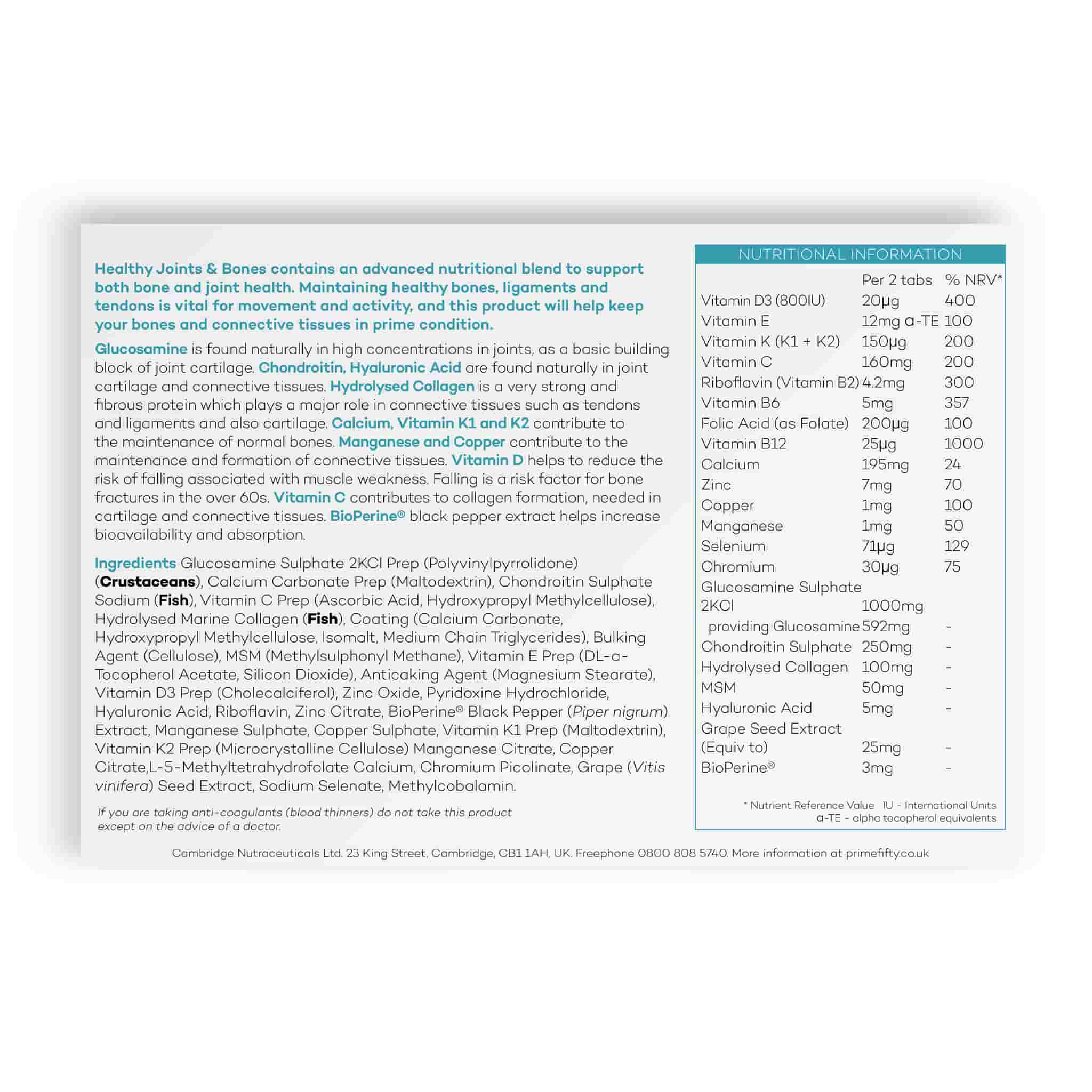
The formulation contains 2 billion live bacteria from 14 different strains, including Lactobacillus and Bifidobacterium strains. I’ve combined them with a broad range of micronutrients that are known to support normal immune function, including vitamins A, C, D, B6 and B12, folate, iron, copper and selenium.
It also contains calcium, which contributes to the normal function of digestive enzymes, together with BioPerine®, a patented black pepper extract included to support nutrient absorption, which is useful for the older gut.
Gut health, good nutrition and immune health are closely connected
Our immune systems are working for us every second of every day, whether we're aware of it or not. And looking after them isn't just about one vitamin, food or supplement – it's about the bigger picture.
Eat a varied diet. Stay active. Sleep well. Manage stress where you can. Look after your gut. And make sure you're getting the micronutrients your body needs.
Rather than waiting until winter or until you feel run down, think of immune health as something worth supporting all year round.





Leave a comment
This site is protected by hCaptcha and the hCaptcha Privacy Policy and Terms of Service apply.