


It's not just the years, it's the mileage.
Our hardworking musculoskeletal system is a trio of interlinked muscles, bones and joints that changes as we age – due to biology, lifestyle factors and just natural wear and tear.
Joint cartilage becomes thinner and less flexible with age, and protective membranes can tend to dry out. If bones start to rub against each other, it can lead to inflammation and pain which can make it harder to stay active – and that in turn can accelerate a loss of muscle and bone strength.
Meanwhile, our bones naturally become less strong with age – a fact of life that sometimes only becomes apparent after a fracture occurs.
Bone density starts to decline in men from around the age of 55 on average, and in women during menopause, starting on average around 51.
The hormone oestrogen is important for maintaining healthy bones in both men and women. A sharp decline in oestrogen during and after menopause leads to a rapid drop in bone density, leaving women more at risk for osteoporosis.
While all this is happening, the gut's ability to absorb vitamins and minerals important for joint and bone health also declines as we age, and lifestyle choices like smoking, poor diet and a lack of physical activity play a major role.
But – like so many other aspects of getting older – a lot of this is still firmly within your control.
Feed your bones with calcium and vitamins D and K2
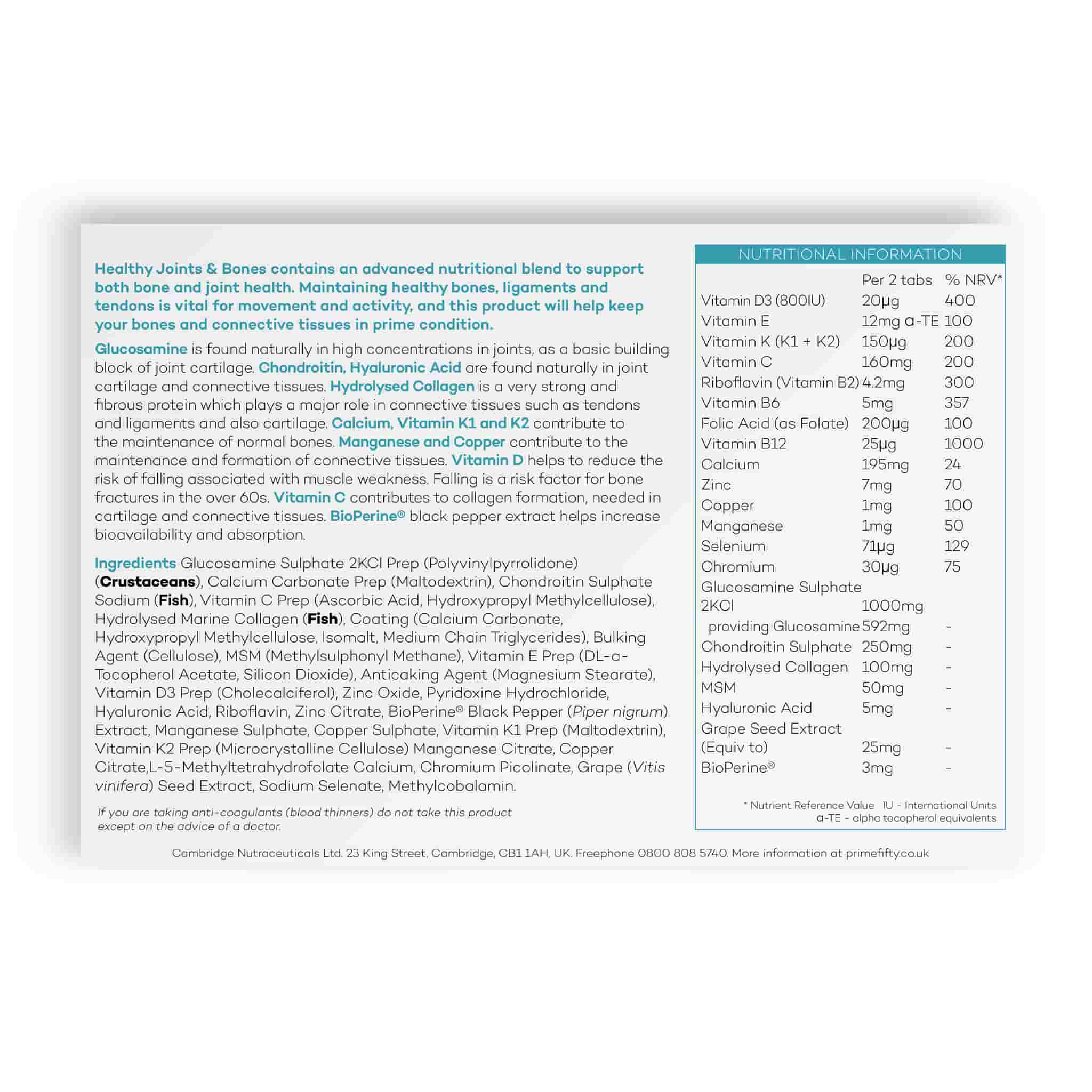
Strong bones not only need calcium but also vitamin D to support its absorption, and vitamin K2 to direct the calcium into bone and away from arteries – plus magnesium, zinc, manganese, copper and protein.
Vitamin D helps reduce the risk of falling due to postural instability as we get older, a major risk factor for bone fractures in both men and women after 60. Together, calcium and vitamin D have been shown to reduce bone mineral loss in postmenopausal women, a risk factor for osteoporotic bone fracture.
A 2017 study found that people taking a combined vitamin D, calcium and K2 supplement were 25% less likely to suffer a fracture during their lifetime. In Japan, a form of vitamin K2 is recommended as a standard supplement for people with osteoporosis.
Good sources of calcium include milk, cheese and other dairy, while green leafy vegetables like broccoli and spinach provide some vitamin K. But most people in the UK aren't hitting the recommended daily allowance for calcium, especially those who don't eat or drink dairy.
Sensible supplementation can play a key role here, with just one caution: overdosing on calcium has been associated with cardiovascular problems, so choose a supplement that helps you top up calcium levels without going overboard.
Keep your joints flexible with good nutrition
Glucosamine and chondroitin are natural compounds found in cartilage and joint fluid, essential for maintaining cushioning between bones by creating the building blocks of cartilage and retaining water to act as a 'shock absorber'.
We also need extra nutrients to support the health and complex biochemistry of joint tissues, including collagen, MSM and hyaluronic acid, copper, vitamin C and manganese to support cartilage and connective tissues like tendons and ligaments. Antioxidants such as selenium and vitamin E also help with anti-inflammatory support.
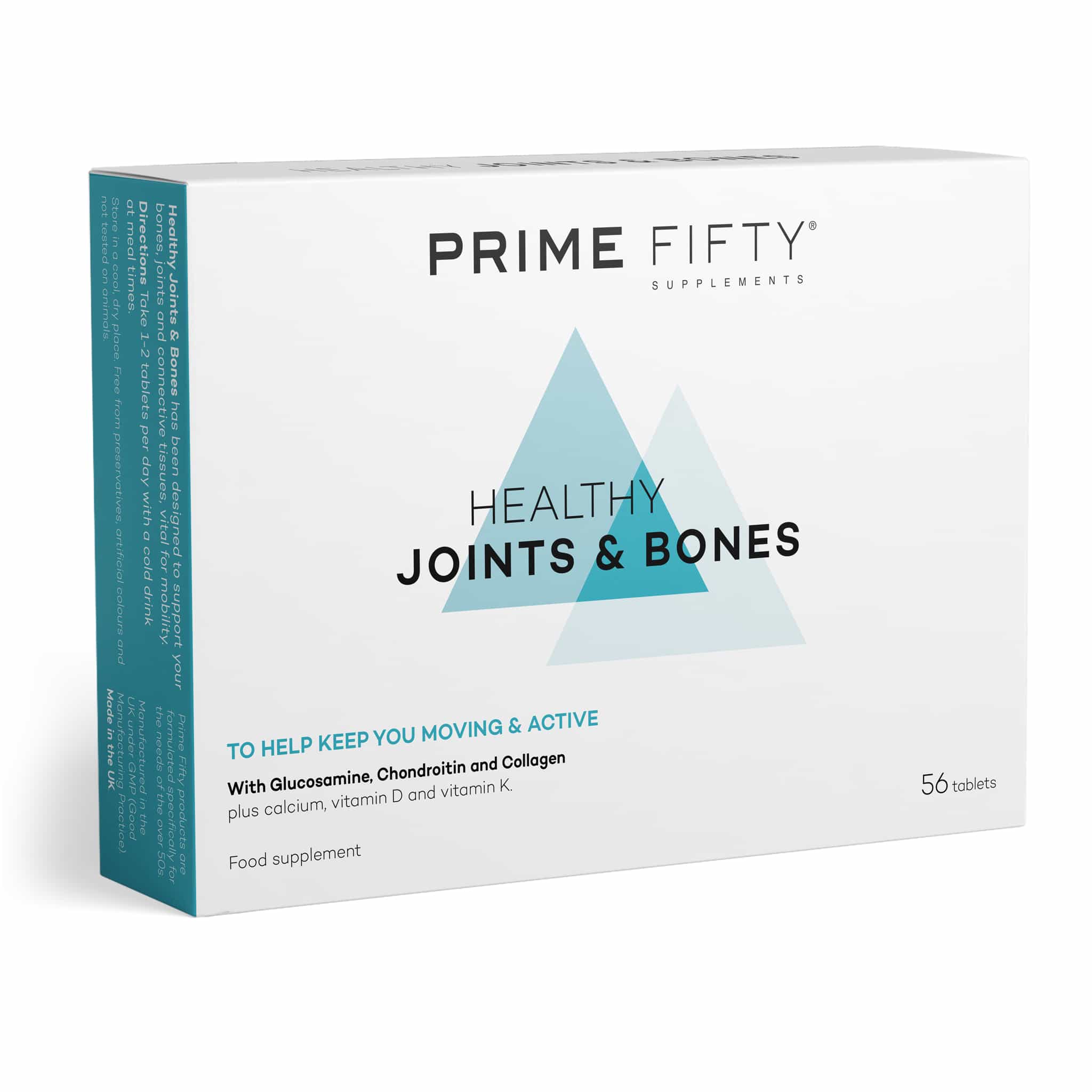
Although your body can obtain and make many of these nutrients on the basis of a healthy diet, a high-quality supplement can help ensure you're not missing out. Prime Fifty's Healthy Joints & Bones includes all of these key ingredients.
Stay active and try to keep a healthy weight
Because the musculoskeletal system is so intimately interconnected, supporting your muscle strength with regular activity like walking and weight-bearing exercise also helps support your bones and joints. Even just dancing or climbing the stairs can be beneficial.
Exercise and maintaining a healthy weight not only strengthens the muscles, ligaments and tendons around our joints, but reduces the load on them and decreases the risk of joint or back injury. Studies show that people who are obese are four times more likely to develop arthritis.
Meanwhile, strength training can not only slow down bone loss, it can even help build up bone mass. Studies have shown that putting positive stress on our bones activates bone-forming cells, making them stronger and denser.
Life doesn't stop at 60, 70 or even 80 and beyond. But to stay active, independent and engaged in the things we love, we can all benefit by taking proactive steps to protect our joints and bones.
Dr Max Gowland, PhD is the founder of Prime Fifty.
References
- Finkelstein JS, Brockwell SE, Mehta V, et al. Bone mineral density changes during the menopause transition in a multiethnic cohort of women. J Clin Endocrinol Metab. 2008;93(3):861–868.
- Marques EA, Mota J, Viana JL, et al. Response of bone mineral density, inflammatory cytokines, and biochemical bone markers to a 32-week combined loading exercise programme in older men and women. Arch Gerontol Geriatr. 2013;57(2):226–233.
- Schwalfenberg GK. Vitamins K1 and K2: The Emerging Group of Vitamins Required for Human Health. J Nutr Metab. 2017;2017:6254836.





Leave a comment
This site is protected by hCaptcha and the hCaptcha Privacy Policy and Terms of Service apply.