


Let’s start with a basic question: why does taking a supplement matter at all?
The National Diet and Nutrition Survey, run by Public Health England, gives us the answer: Too many of us aren’t getting the recommended daily amounts of vital micronutrients for health.
For example, a staggering 70 percent of people in the UK aren’t getting enough magnesium, iron, zinc, vitamin D, vitamin E, biotin or selenium – important for our immune system, bone health, muscle function, digestion, cognition, protection of cells, digestion, blood health and more.
Making sure you take your supplements every day is the fastest way to build up and maintain nutrients like these in your body so that they can get to work – and keep working.
How long until they start working?
Supplements aren't pharmaceutical drugs, and most don’t have an immediate effect. Supplements work more like a nourishing diet, building up nutrients over time until they reach effective levels.
How long they take to do that varies from person to person, depending on many factors, including how well your gut is able to absorb them. If you're starting from a low level of vitamin D, for example, it can take weeks or months to achieve a healthy level, even if you’re taking your supplement every day.
If you keep skipping days, stopping and starting, it will take even longer to build up and will be harder to maintain. That’s why consistency really is key – and the steadier your daily intake, the sooner the benefits for your health.
Once you’ve built your daily supplement habit, keep going. Long-term support for your health will be working quietly and steadily in the background.
How to build a strong supplement habit
Here are a few ideas to help make your daily supplement routine easy to remember.
Check your pack for guidance
Take a moment to read the directions on your supplement pack, as how much to take may vary. For example, if you’re starting out with Brain & Cognition, you’ll need to take one capsule and one softgel together at the same time each day.
Also check whether your supplement is best taken with food. Fat-soluble nutrients like vitamin D get absorbed more effectively with some dietary fat rather than on an empty stomach.
Take it at the same time every day
Repetition is key. Research into habit formation shows that you’re more likely to stick if you perform it at the same time every day. For some people, morning habits work better than evening ones.
‘Habit-stack’ it with something you already do
You can make a new habit stick by ‘stacking’ it onto an existing routine. Try taking your supplement right after brushing your teeth, with your morning cup of tea, or just after breakfast. The familiar cue will remind you.
Keep your supplements visible
Leaving your supplements hidden out of sight really can leave them out of mind. Keep your supplements somewhere you’ll see them – on the kitchen counter, next to the kettle, or by your toothbrush (just make sure they’re kept away from heat or moisture).
Use a reminder
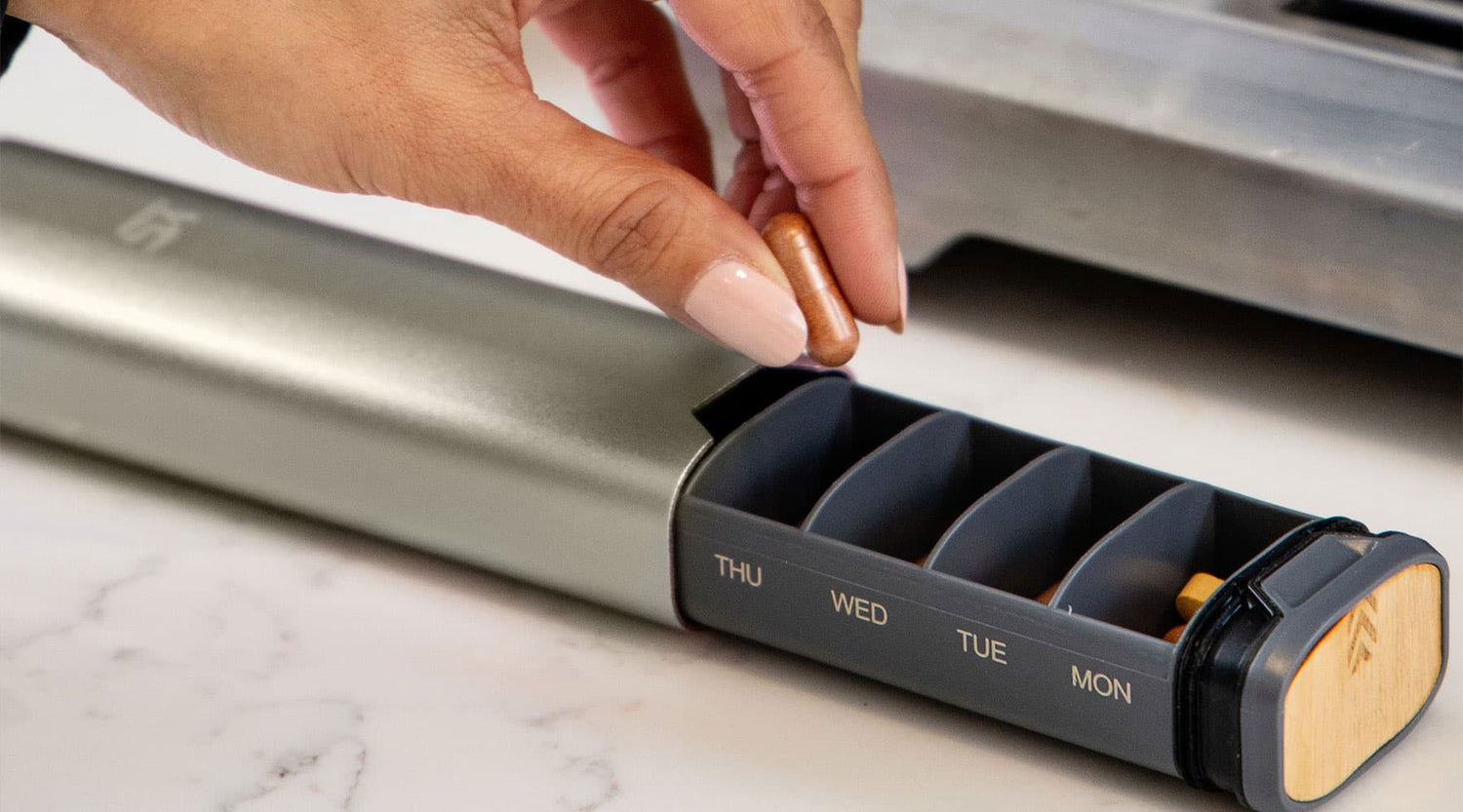
Set a phone alert or try a daily reminder app. Some people also find pill organisers helpful – especially if you take more than one supplement.
Consider keeping a back-up
You could keep a small supply in your bag or at work, so you’re covered if you forget at home.
If you miss a day, don’t stress
Just get back on track the next day.
I take my supplements every evening with dinner, including Omega 3 and Gut & Immunity, washed down with a pair of Super Greens dissolved in a half-pint of water. If I'm travelling for one or two days, I might simplify my routine with a Multi-Nutrient.
Building a new habit takes a little time, but every step gets you closer to maintaining those important daily nutrient intakes. Taking your supplements consistently is one of the simplest and most reliable ways to help support your health as you age.
Dr Max Gowland, PhD, is the founder of Prime Fifty.






Leave a comment
This site is protected by hCaptcha and the hCaptcha Privacy Policy and Terms of Service apply.